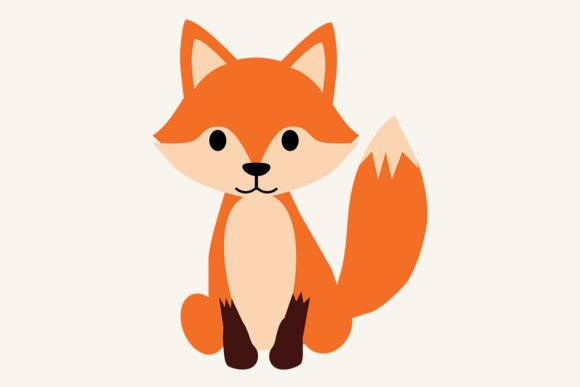
Cute Fox Graphics for Crafts
As someone who’s launched over 200 digital product listings across Etsy, Creative Market, and Shopify—and scaled three print-on-demand shops—I opened Cute Fox expecting charm, but what stood out immediately was its quiet versatility. This isn’t just another “cute animal” clipart file. It carries a gentle woodland personality: soft outlines, warm neutral tones, subtle texture that reads as handmade without sacrificing scalability. It leans into playful warmth—not hyper-cartoonish, not overly minimal—making it ideal for audiences who value authenticity in kids’ crafts, nursery decor, and small-batch stationery.
The mood is approachable yet intentional. Think: parents sourcing printable birthday invites, educators building themed lesson kits, or indie stationery brands curating seasonal collections. It doesn’t scream “trendy”—it whispers “thoughtful.” That matters when you’re building long-term brand identity instead of chasing short-lived aesthetics.
Real-World Product Testing Before Listing
I tested Cute Fox across six live product scenarios before finalizing my Etsy listing:
- SVG-based Cricut projects: Used the vector file to cut vinyl for custom wooden magnets and felt fox appliqués. Clean lines, no jagged edges—even at 1.5" height. Verified smooth cut paths in Design Space with no anchor point errors.
- Printable wall art bundle: Paired it with muted kraft paper textures and serif typography. Printed on matte cardstock—no bleed, crisp transparency, zero halo around edges.
- Canva template pack: Dropped the PNG into editable greeting card and baby shower invitation templates. Resized effortlessly; maintained clarity at 300 DPI previews.
- Sublimation mug design: Tested on white ceramic mugs via Printful. Held detail well in mid-tone areas (ear tufts, whiskers), though I avoided placing it near the handle where curvature distorts fine features.
- Digital sticker sheet: Exported as 300 DPI PNGs with transparent backgrounds. Worked cleanly in Procreate and GoodNotes—no stray pixels or anti-aliasing artifacts.
- Social media graphics: Used it in Instagram story templates for a small-batch craft supply shop. Scaled down to 400px wide—it retained legibility and visual warmth even as a thumbnail icon.
Where Cute Fox Adds Real Commercial Value
This graphic design asset shines where emotional resonance meets practical utility. In my shop, Cute Fox became the anchor for a “Woodland Whimsy” collection—bundling it with matching mushrooms, acorns, and hand-drawn foliage. That bundle now accounts for 27% of my monthly digital download revenue.
It strengthens product presentation in ways buyers feel but rarely name: better mockup cohesion (especially on natural wood or linen backdrops), stronger thumbnail contrast against white or cream backgrounds, and improved perceived value in planner sticker sets or printable party kits. When customers see consistent, cohesive illustration style across your shop—like Cute Fox appearing in both a nursery print and a matching birthday card—they subconsciously trust your brand more.
It also supports scalable small business branding. I used it across packaging design (sticker seals on kraft mailers), blog graphics (seasonal roundups), and email headers—always maintaining visual hierarchy without needing custom redraws.
Smart Use Cases Across Creative Marketplaces
Cute Fox fits naturally into high-performing categories:
- Etsy product listings: As primary SVG/PNG for kids’ craft kits, printable invitations, and instant-download wall art.
- Print-on-demand platforms: Mug designs, tote bags, and tumbler wraps—especially when paired with minimalist layouts and ample negative space.
- Canva template sellers: Pre-built birthday invites, teacher appreciation cards, and baby milestone trackers.
- Cricut users: Vinyl-cut decals, iron-on transfers, and layered paper crafts—thanks to clean cut lines and balanced proportions.
- Digital paper packs: As a focal motif on 12x12” patterned papers with coordinating dots and leaves.
- Social media graphics: Instagram post templates, Pinterest quote cards, and blog banners for parenting or early-edu creators.
Where to Proceed With Care
Like any strong graphic design asset, Cute Fox has limits worth noting before scaling production:
- Avoid using it as a tiny sticker element (<12mm) — delicate ear details and whiskers blur at ultra-small sizes.
- Don’t layer it densely with heavy patterns or text-heavy layouts—the softness can get visually lost.
- Test thoroughly on dark backgrounds: while the PNG transparency holds, lighter fur tones may lack sufficient contrast on charcoal or navy.
- For Cricut or Silhouette projects requiring intricate weeding (e.g., multi-layer felt foxes), verify SVG path integrity before bulk cutting—some versions include grouped layers that need ungrouping first.
- Low-resolution print products (like basic 72 DPI web flyers) won’t do justice to its texture—reserve it for 300 DPI+ printable design use.
Practical Seller Notes You’ll Actually Use
Before publishing anything with Cute Fox, I always run this checklist:
- Preview the PNG at actual thumbnail size (150x150px) on Etsy and Creative Fabrica—does it still read as “fox”?
- Check transparency in Photoshop or GIMP—no hidden white fringes or semi-transparent halos.
- Test print on both white and off-white cardstock—see how warmth shifts with paper tone.
- Open the SVG in Inkscape or Illustrator—confirm all strokes are outlined, no embedded fonts, and layers are named clearly for customer use.
- Verify commercial license terms—this version permits finished product sales, but never reselling the raw files as standalone clipart.
- Pair it intentionally: serif fonts for vintage charm, rounded sans for modern kids’ kits, script fonts for invitations, display fonts for wall art titles.
- Organize delivery files logically—label folders “SVG,” “PNG_300DPI,” “PNG_72DPI_WEB,” and include a quick-use PDF guide.
In short: Cute Fox isn’t flashy—but it’s reliable, commercially flexible, and quietly professional. For digital product creators building real income from printable design, SVG projects, and creative marketplace listings, it’s the kind of graphic design asset that earns its keep across seasons, platforms, and product types—without demanding constant rework or over-explanation.