Black and Educated: A Designer’s Real-World Embroidery Review
First Impressions: Bold, Grounded, and Unmistakably Human
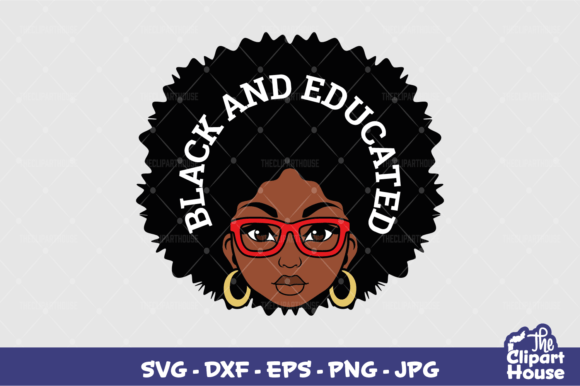
When I opened Black and Educated for the first time, I didn’t see just text — I saw presence. The layout is clean but intentional: strong vertical rhythm, balanced negative space, and letterforms that carry weight without stiffness. It doesn’t shout; it stands. As a designer who’s stitched hundreds of phrases onto tote bags, baby onesies, and boutique aprons, I immediately pictured it on a heavyweight organic cotton tote — not as a slogan, but as quiet affirmation. That’s the mood it creates: dignified, warm, and rooted. It belongs in spaces where intention matters — nursery walls, teacher appreciation gifts, graduation swag, or small shop branding that values substance over flash.
How It Stitches: From Screen to Seam
I tested Black and Educated on three real project types: a midweight unisex sweatshirt (cotton-poly blend), a linen tea towel, and a twill patch for a denim jacket. On the sweatshirt, the design held up beautifully with standard tear-away stabilizer and 40-weight rayon thread — no puckering, no skipped stitches. The letter spacing stayed legible even at 3.5 inches wide, and the stroke consistency meant satin-stitched edges looked crisp, not fuzzy. On the tea towel, I switched to cut-away stabilizer and reduced density slightly; the fill stitch settled smoothly into the weave without bleeding or shadowing. And on the patch? Perfectly crisp corners and clean outlines — ideal for iron-on backing and long-term wear.
Where it shines most is in personalized gift and small shop product contexts. Think: a custom embroidered pillow cover for a new educator’s home office, or a set of matching aprons for a Black-owned cooking school. It reads clearly at medium scale (3–4.5 inches), carries emotional resonance without leaning on cliché, and avoids visual clutter — critical when you’re stitching on curved surfaces like caps or layered garments like hoodies.
Where to Use It — and Where to Pause
Black and Educated works best on stable, medium-to-heavyweight fabrics: canvas, twill, fleece-lined sweatshirts, structured totes, and quilting cotton. It’s not ideal for ultra-thin tees, highly stretchy knits, or delicate baby rib — unless you add significant stabilization and reduce stitch density manually. Tiny hoop sizes (under 4x4 inches) will require scaling down, and at under 2.75 inches, some interior counter-spaces (like the eye of the “e” or inner curve of the “a”) start to compress. If you’re planning a cap embroidery project, test the design on a curved cap mockup first — the top arch of the phrase may need slight repositioning to avoid distortion.
Dark fabric? Yes — but choose thread colors with high contrast. A deep navy or charcoal base pairs well with cream or gold thread, while black-on-black risks disappearing. For heat transfer or printable use (as noted in its description), the vector-based clarity holds up cleanly on stickers, invitations, and stationery — making it equally useful as a digital embroidery file and a printable mockup asset.
Design Notes Every Embroidery Professional Should Check
- Test on scrap fabric first — especially if using textured or layered materials like terry cloth or quilted cotton.
- Review stitch density — dense fills can stiffen lightweight fabrics; consider lightening fill areas if stitching on baby clothes or scarves.
- Confirm hoop size compatibility — this isn’t a tiny monogram, so ensure your machine’s largest hoop accommodates your intended scale.
- Inspect small details — zoom in on letter junctions and curves before sending to your machine. Look for stray nodes or overlapping paths.
- Try black-and-white mockups — see how it reads without color distraction, especially for Etsy listings or craft fair signage.
- Compare light vs. dark backgrounds — what reads boldly on ivory may fade on heather grey unless thread contrast is dialed in.
- Use proper stabilizer — tear-away for stable wovens, cut-away for knits or anything that will be washed frequently.
- Verify licensing — since this is marketed for commercial use (Cricut, Silhouette, heat transfer, apparel), confirm whether resale of finished embroidered items or digital redistribution is permitted before listing on Etsy or bundling in design assets.
What It Adds to Your Finished Product — Beyond Stitching
Using Black and Educated elevates more than just the item — it shapes perception. Customers notice authenticity. A handmade tote bag with this phrase feels considered, not generic. An embroidered baby blanket carries warmth and intention. For an Etsy seller or craft business, it strengthens brand consistency across products: same phrase, different applications — pillow, mug wrap, sticker sheet — all unified by tone and typography. It builds trust because it doesn’t overpromise; it states, quietly and firmly.
In holiday embroidery or wedding gift contexts, it adds meaning without sentimentality — think “Black and Educated” stitched inside a graduation cap box or alongside a pressed flower on a linen handkerchief. And for commercial embroidery clients — schools, nonprofits, community centers — it delivers professionalism with cultural resonance, avoiding caricature or oversimplification.
A Word on Its Place in Your Design Toolkit
This isn’t a filler graphic. Black and Educated sits in the same category as thoughtful, reusable design assets: reliable, adaptable, and human-centered. It fits seamlessly into a crafts workflow whether you’re prepping for a farmers’ market, building an Etsy collection, or creating limited-run patches for a local initiative. As a graphics file, it bridges embroidery and print — so you can use it across mediums without losing integrity.
If you’re evaluating it for client work, ask yourself: Does it reflect their voice? Does it hold up after five washes? Does it look handmade — not mass-produced? With Black and Educated, the answer is yes, provided you respect its natural scale, fabric pairings, and context. It’s not flashy. It’s focused. And in today’s handmade landscape, that kind of clarity is rare — and valuable.