Golfing SVG: A Designer’s Real-World Embroidery Review
First Impressions: Clean, Confident, and Ready for the Green
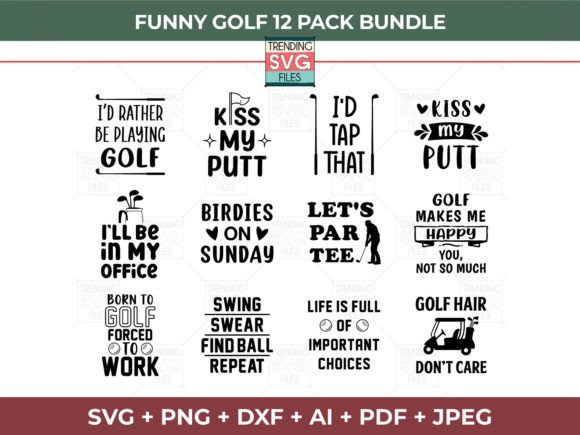
Opening the Golfing SVG package, I immediately noticed how well the 72 files are organized—12 SVGs, 12 PNGs, plus DXF, AI, PDF, and JPEG versions. As someone who tests embroidery designs daily for client work and my own craft business, I scanned the visuals first: stylized golf clubs, a subtle ball in flight, minimalist flags, and one or two cleverly integrated phrases like “Fore!” or “Swing Easy.” No clutter. No over-rendered shadows or gradients. Just confident line work and balanced negative space—exactly what makes a strong machine embroidery design translate cleanly to fabric.
A Real Project Test: Custom Embroidered Tote Bags for a Local Golf League
Last week, I used Golfing SVG to create personalized tote bags for a women’s amateur golf league launching their spring season. We chose a medium-weight canvas tote—sturdy but not overly thick—and stitched a compact club-and-flag motif (one of the simpler 12 SVGs) on the front pocket. The result? Crisp satin stitch edges, no thread nesting in corners, and zero distortion across the slightly curved seam. Customers loved how professional it looked—not “cute” or “cartoony,” but quietly sophisticated. That tells me Golfing SVG works best when you want elegance over exuberance: think boutique apparel, custom sweatshirt embroidery for golf resorts, or nursery decor for a baby whose parents met on the 18th green.
Where It Shines—and Where to Pause
Golfing SVG performs reliably across multiple applications:
- Custom apparel: Works beautifully on crewneck sweatshirts and structured caps—especially the bolder flag or bag designs that hold up at 3–4 inches wide.
- Embroidered patch: Several files have clean outer borders and moderate fill stitch density, making them ideal for iron-on or sew-on patches on jackets or hats.
- Baby embroidery: The softer, rounded motifs (like a single club with a tiny birdie icon) stitch cleanly on cotton knit onesies—just avoid the most detailed files unless you’re using lightweight tear-away stabilizer.
- Holiday or wedding gifts: Pair a simple “Tee Time” SVG with linen tea towels or pillow covers—it reads clearly, stitches quickly, and feels intentional, not generic.
But here’s where attention matters: the more intricate files—with fine lettering or overlapping club shafts—need testing before scaling down below 2.5 inches. On textured fabrics like terry cloth or loosely woven canvas, those thin running stitch accents can disappear or snag. And on dark fabric? Always check contrast in your embroidery software preview—some of the lighter PNG mockups don’t reflect how thread saturation actually behaves under dense fill stitch.
Design Integrity Meets Commercial Practicality
As an Etsy seller and small shop product developer, I care about how a design affects perceived value—not just stitch count. Golfing SVG supports brand consistency because its visual language is cohesive: consistent stroke weight, harmonious spacing, and no competing visual hierarchies. That means whether you’re embroidering a cap for your golf-themed café or bundling digital embroidery files for other makers, customers recognize quality instantly. It builds trust—especially important for handmade product buyers who associate clean lines with skilled craftsmanship.
I also appreciate that this isn’t a “kitchen sink” bundle. Twelve distinct SVGs means real variety without redundancy: one for monogrammed baby blankets, one for oversized back-of-jacket placement, one scaled perfectly for a left-chest embroidered patch. No filler. That focus makes Golfing SVG feel curated—not algorithm-generated—which directly impacts buyer engagement on platforms like Etsy or craft fairs.
Practical Designer Notes Before You Stitch
Before committing to a client project or production run, here’s what I always do with a new digital embroidery file like Golfing SVG:
- Test on scrap fabric first—especially if using stretchy knits or dark, napped fabrics. Note how stabilizer choice affects stitch definition.
- Review stitch density in your embroidery software. Some files may layer fills tightly; adjust if stitching on lightweight cotton or baby items.
- Confirm hoop size compatibility. Not all 12 SVGs will fit comfortably in a 4×4 hoop—check dimensions before digitizing or converting.
- Inspect small details like club grip textures or flagpole tips. If they vanish at 2 inches tall, simplify or omit them.
- Try black-and-white mockups to assess readability—this reveals contrast issues before thread is cut.
- Compare light vs. dark fabric backgrounds visually and in stitch simulation. A design that pops on white may recede on navy.
- Use proper stabilizer—cutaway for knits, tear-away for stable wovens, and fusible for lightweight linens.
- Verify licensing before selling finished products or reselling digital files. This listing says it includes Graphics for Crafts—but confirm commercial use rights directly with the seller.
Final Thought: A Quietly Versatile Asset for Makers Who Value Clarity
Golfing SVG won’t shout from the shelf—but it doesn’t need to. Its strength lies in restraint, adaptability, and thoughtful execution. Whether you’re building a craft business around personalized gifts, stocking a boutique with seasonal embroidery projects, or designing digital assets for fellow Etsy sellers, this set delivers reliable, stitch-ready clarity. It respects the fabric. It respects the machine. And most importantly, it respects the time and intention of the maker using it.
If you’re choosing between flash and function, Golfing SVG is the quiet confidence behind a perfectly balanced embroidered tote bag—the kind that gets complimented, not questioned.